
Three scarf moves I use to color-block without looking like I got dressed in the dark.
The two-color knot that makes brights feel wearable
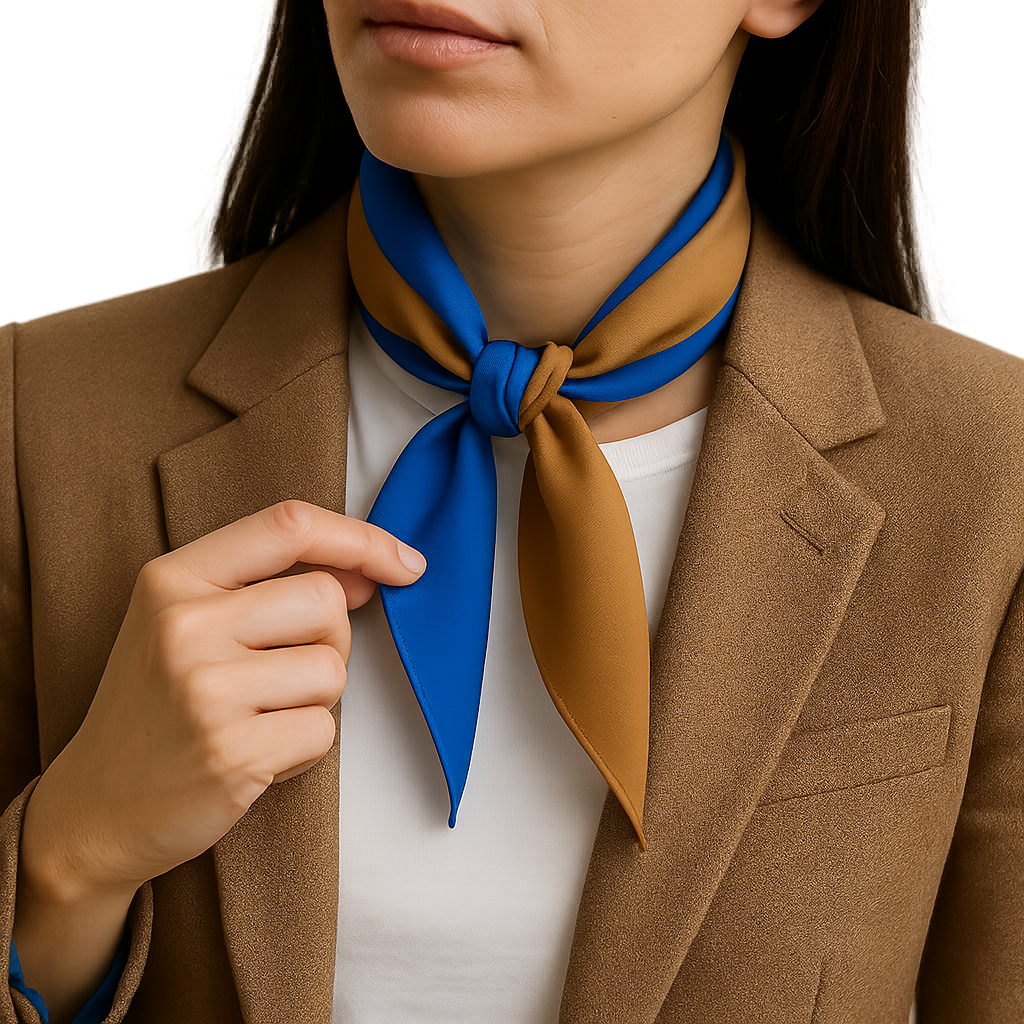
If I want color-blocking that reads intentional (not "I grabbed whatever was on the chair"), I start with two scarf colors that are far apart on purpose: cobalt and camel, fuchsia and chocolate, kelly green and navy. The trick is not draping. It is a knot that shows both sides like a little flag so you get two clean hits of color without the scarf swallowing your whole torso.
Here is how I do it with a 35-inch to 36-inch square silk scarf. Fold it into a triangle, then keep folding from the long edge into a band about two fingers wide. Now twist the band twice so the edges roll inward (that twist is what keeps it from looking flat and limp). Wrap it around your neck once, bring the ends forward, and tie a small, tight square knot right at the hollow of your throat. Not a bow. A knot. Then I tug one tail a touch longer than the other so you see two separate blocks instead of a perfect mirror image.
What makes this work is the supporting cast. I keep everything else simple and structured: a white tee or a black knit, straight jeans, and a jacket with lapels that can "frame" the scarf. A blazer, a trench, even a denim jacket. The lapels act like punctuation, and the scarf becomes the bright sentence in the middle. If your scarf is super slippery, hit the knot with a tiny scarf ring or even a hidden bobby pin behind the knot (pin through the folded band, not the silk face) so it stays put through coffee, commute, and that weird moment when you bend down and your scarf tries to escape.
Use a bag handle as your third color (without buying one)
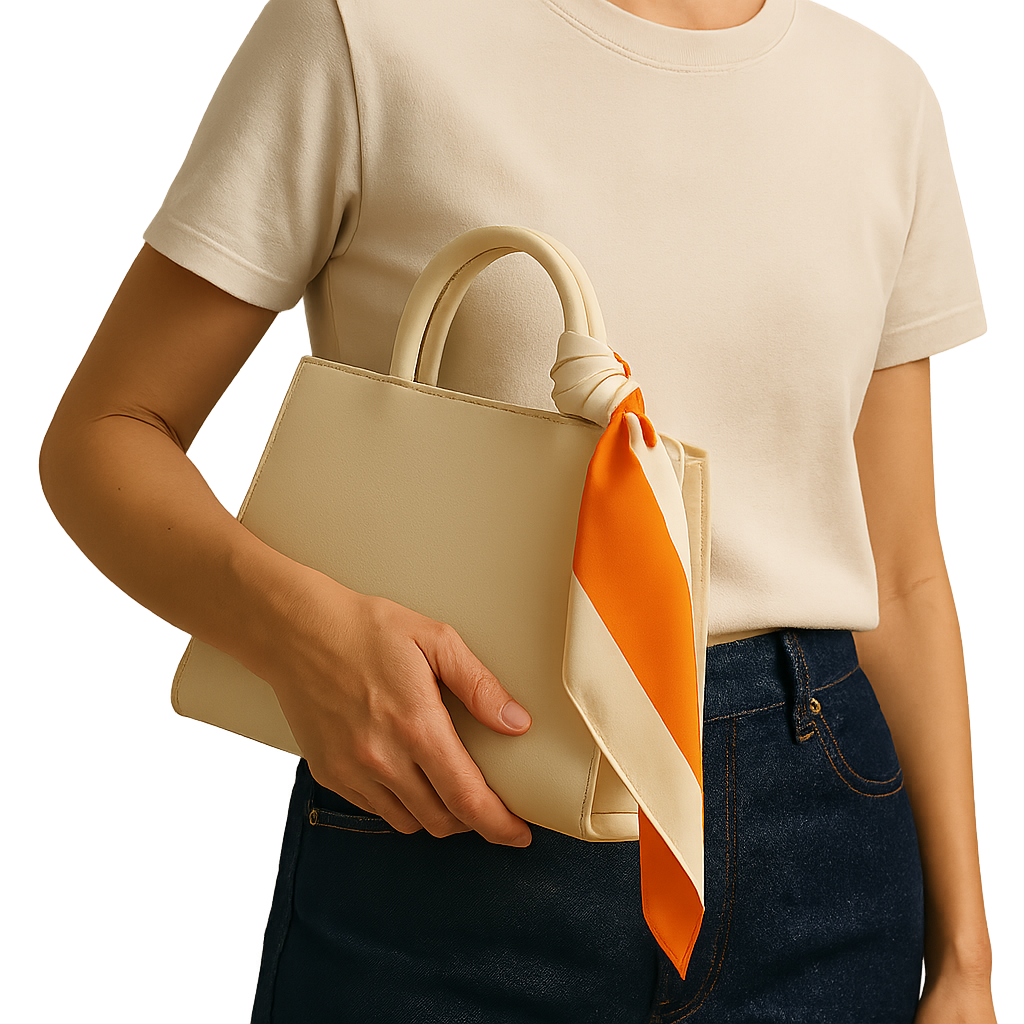
When I see color-blocking done well in the wild, it is rarely three loud garments fighting each other. It is usually two solid clothing colors, then a third pop that lives on an accessory. My most-used version is a scarf on a bag handle because it gives you the "third color" without forcing you to commit to, say, bright shoes all day.
I do this with a small square (the 20-inch to 27-inch size is ideal) or a skinny twilly-style scarf. Pick a bag you already carry constantly, preferably in a neutral you don't have to think about: black, tan, navy, oxblood. Now choose a scarf that contains one color from your outfit and one color you want to introduce. Example: you are wearing an all-cream outfit with dark denim. A scarf with cream plus orange, or cream plus teal, makes the pop look planned because it repeats what is already there.
To tie it so it looks crisp and stays put, I wrap the scarf around the handle two to three times, then finish with a flat double knot on the underside of the handle (the side that sits against your body). If it is a twilly, I spiral it down the handle and tuck the end under the last wrap. The important part is leaving one small tail visible, like 2 to 3 inches, so the color reads at a glance. Too long and it looks like you forgot to finish tying it. Too short and it disappears.
This move changes how you shop your closet in the morning. You can wear a black tee and olive trousers, and the scarf on the handle supplies the bright block that makes it feel styled. Bonus: if you get to dinner and want more impact, untie it and wear it on your neck or wrist. It is the same color story, just moved higher where people can see it.
How I match lipstick to a scarf without going too "done"
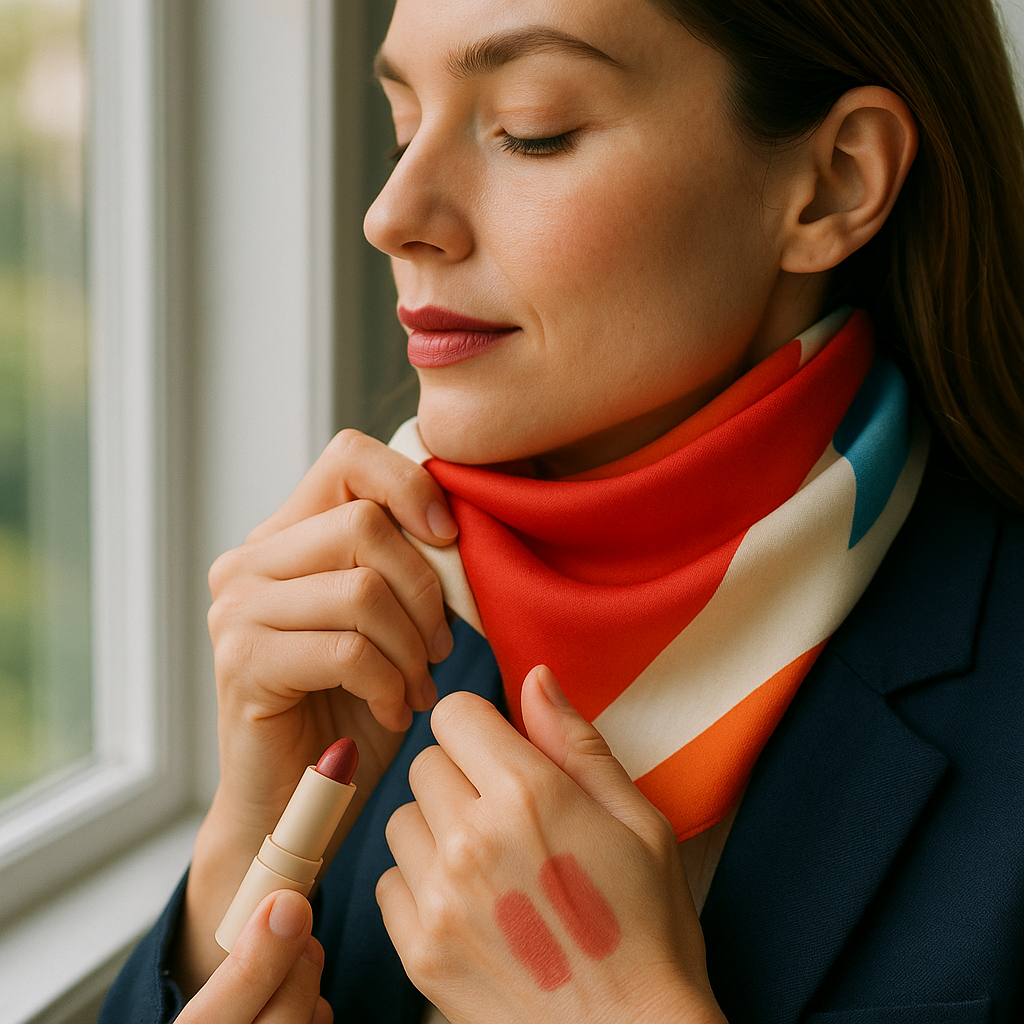
Color-blocking with a scarf is a fast way to feel pulled together, but it can tip into costume if your face is shouting the same volume as your outfit. The fix is not "no makeup." It is choosing one tiny echo of the scarf and keeping the rest soft. I do it with lipstick because it is the quickest thing to change in a car mirror, and because a scarf already frames your face.
My rule is simple: match undertone, not the exact shade. If the scarf's pop is a blue-based red, I go for a cool berry or a blue-red stain. If the scarf leans warm (tomato, rust, coral), I pick a warm rose or a sheer terracotta balm. Exact matching looks try-hard in daylight. Undertone matching just looks like you knew what you were doing.
Here is the specific way I test it at home: I hold the scarf under my chin in front of a window, then swipe two lip options on the back of my hand. I am not looking for identical color. I am looking for whether my skin goes gray, sallow, or clear. If I start fussing with concealer to "make it work," it is the wrong lip. With a scarf doing color-block duty, I usually prefer a blurred edge. A satin bullet lipstick patted on with a finger, or a tinted balm, reads modern and doesn't compete with the scarf's pattern.
And yes, there is a practical reason too. Scarves move. You talk, you turn your head, you take it off and on. A fully-lined matte red plus silk at your neck is a recipe for tiny smears you will notice in the elevator mirrors all day. If I want stronger color, I use a long-wear lip stain and put clear balm on top, then I let the scarf be the star. The whole point is that the blocks of color look deliberate, not delicate.