
Grab two paint chips and a lipstick: these three color tests stop your outfit from going either flat or costume-y.
Paint chips in your wallet (the no-argument palette)
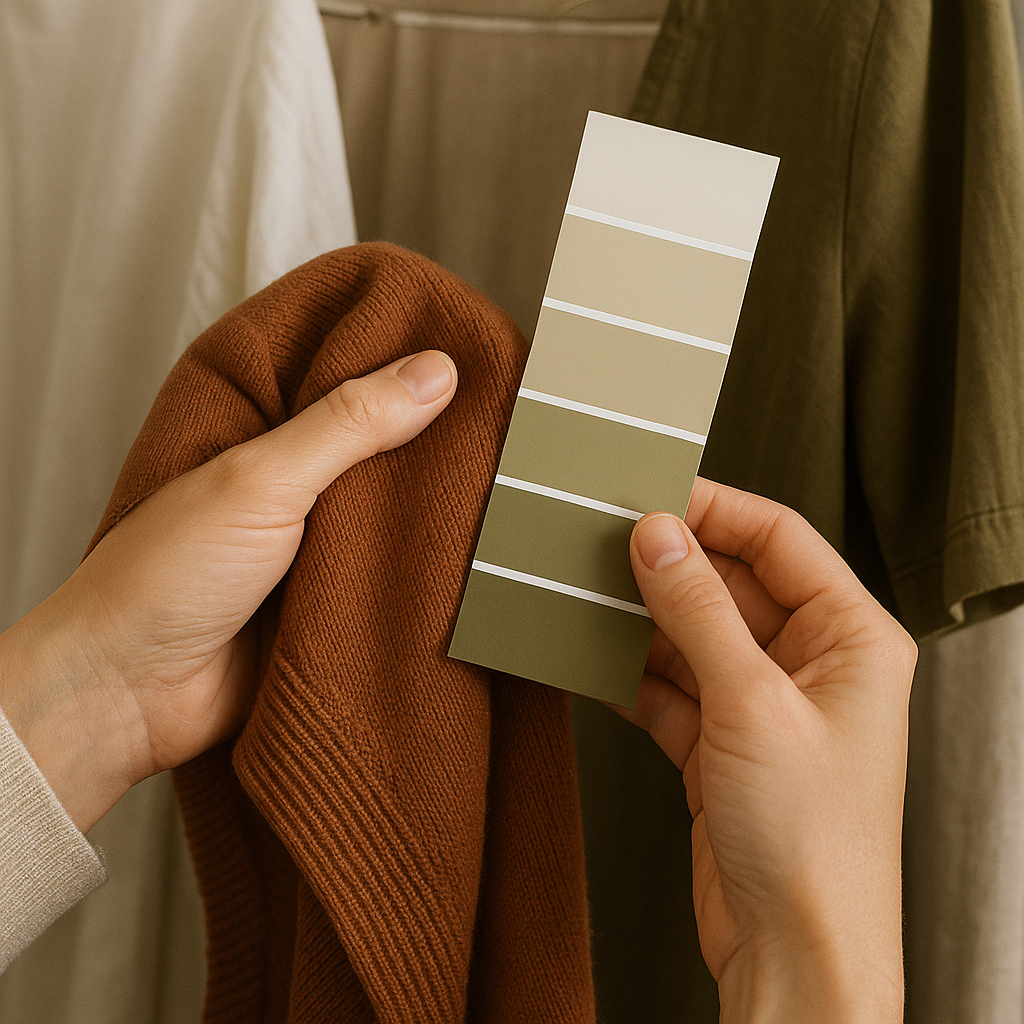
I started carrying paint chips after one too many “Is this green fighting this brown?” mornings that turned into a closet tornado. Not the fan-deck from a designer showroom, just the free paper swatches from the hardware store. The trick is picking chips the way you pick jeans: by what you already reach for. I grab two families that show up in my closet a lot (for me, a soft warm white and a muddy olive), then I take the strip with the little gradient squares. That gradient is the whole point. It gives you built-in tints and shades so you can check whether your “new” color is a cousin or a stranger.
Here is how it plays out in real life. You’re standing in a store holding a sweater in that hard-to-name color, like paprika, putty-lavender, or a dusty teal that looks different every time you tilt it. Put the sweater right up against the paint chip, and don’t look for a perfect match. Look for a square on the strip where it feels like the same world. If the sweater sits nicely on the strip but only matches the very darkest box, it will probably read heavy next to your light basics unless you add one more dark element (shoe, belt, bag). If it only feels “right” next to the palest box, it’s a whisper color and needs contrast to not disappear on your body.
The other thing the chip does is catch undertones when your bathroom lighting lies. Hold the chip so the top edge is right under your chin, then slide it down to the sweater. If the chip makes your face look a little sallow or gray, that’s not drama, that’s information. I keep the chips tucked behind my credit cards, and yes, they get beat up. That’s fine. A creased, coffee-stained chip still tells the truth about whether your “neutral” is secretly pink or whether that “cream” top is leaning green under daylight.
The three-item signature color test: tee, denim, shoe
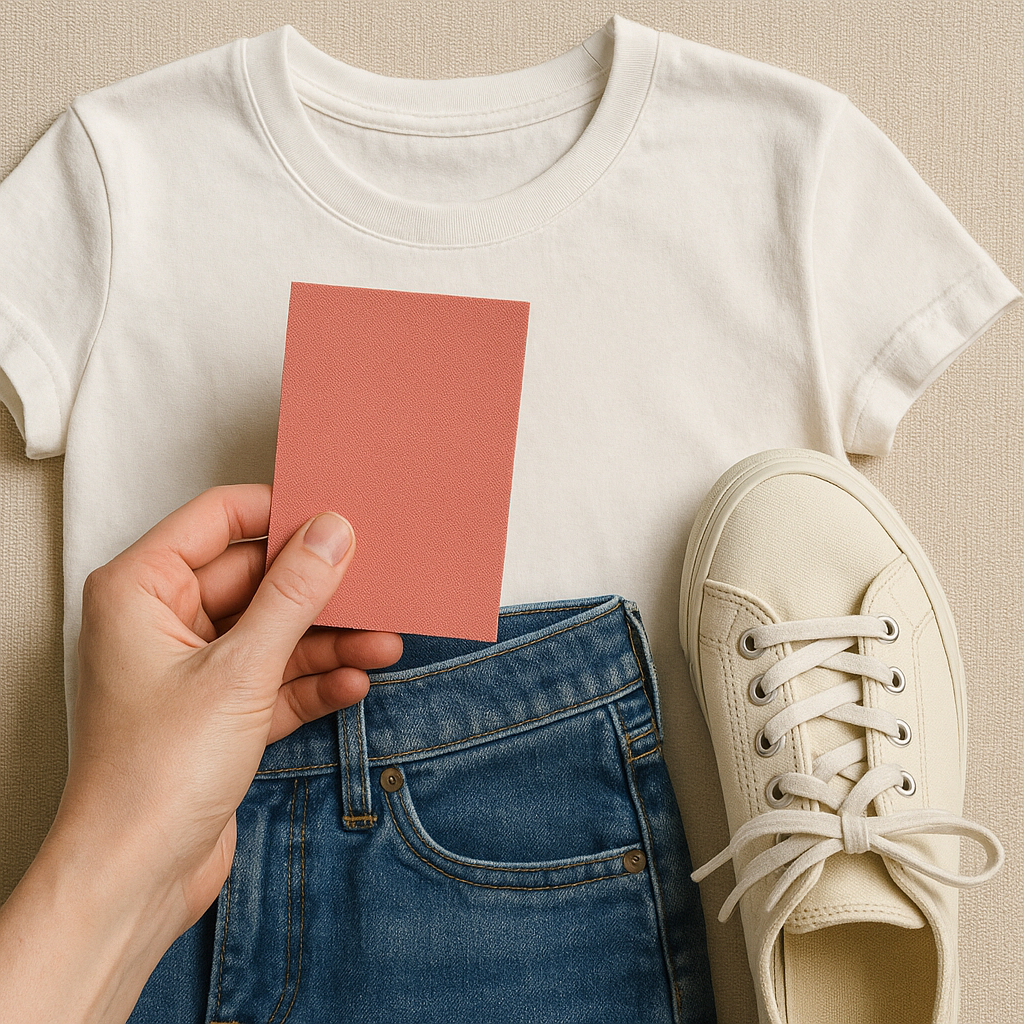
I don’t decide on a “signature” shade by staring at inspo photos. I decide by friction. If a color forces me to buy a new bra, a new shoe, and a new bag just to feel normal, it isn’t a signature for my life, it’s a hobby. So I run every candidate tone through the same three items I already wear constantly: a plain tee, my default denim, and my most boring shoe. You can do this at home in five minutes with what you own, or in a fitting room with your phone photos.
Step one: tee. Hold the color up against a tee you wear a lot (white, ivory, gray, black, whatever is true for you). If the hue makes your tee look dingy or strangely bright, pay attention. That doesn’t mean “don’t buy it,” it means this color will ask for a different white. Some shades love optic white; others look calmer with an off-white. I learned this the hard way with a sharp coral that made every warm white top I owned look like it had been washed with a red sock.
Step two: denim. Put the color next to your main jeans wash. Dark indigo, faded blue, black, ecru. Denim is basically a permanent roommate in most wardrobes, and it has a strong temperature. A cool, inky denim can make certain warm shades look a little orange-y. A faded vintage wash can make cool pastels look icy and distant. If the combination feels “loud” in a way you can’t name, it’s usually undertone mismatch, not you being picky.
Step three: shoe. I use whatever pair I walk the most in, because that’s what will show up in real outfits: white sneakers, black loafers, tan sandals. Shoes are the quickest way to see if your tone is going to skew preppy, sporty, or artsy without trying to. A smoky plum with white sneakers feels modern. The same plum with tan sandals can go oddly autumnal. When a color passes all three, it becomes a reliable signature shade because it already plugs into the life you have, not the imaginary version where you always have the perfect heel and a matching bag.
Lipstick as your color meter (yes, even if you barely wear it)
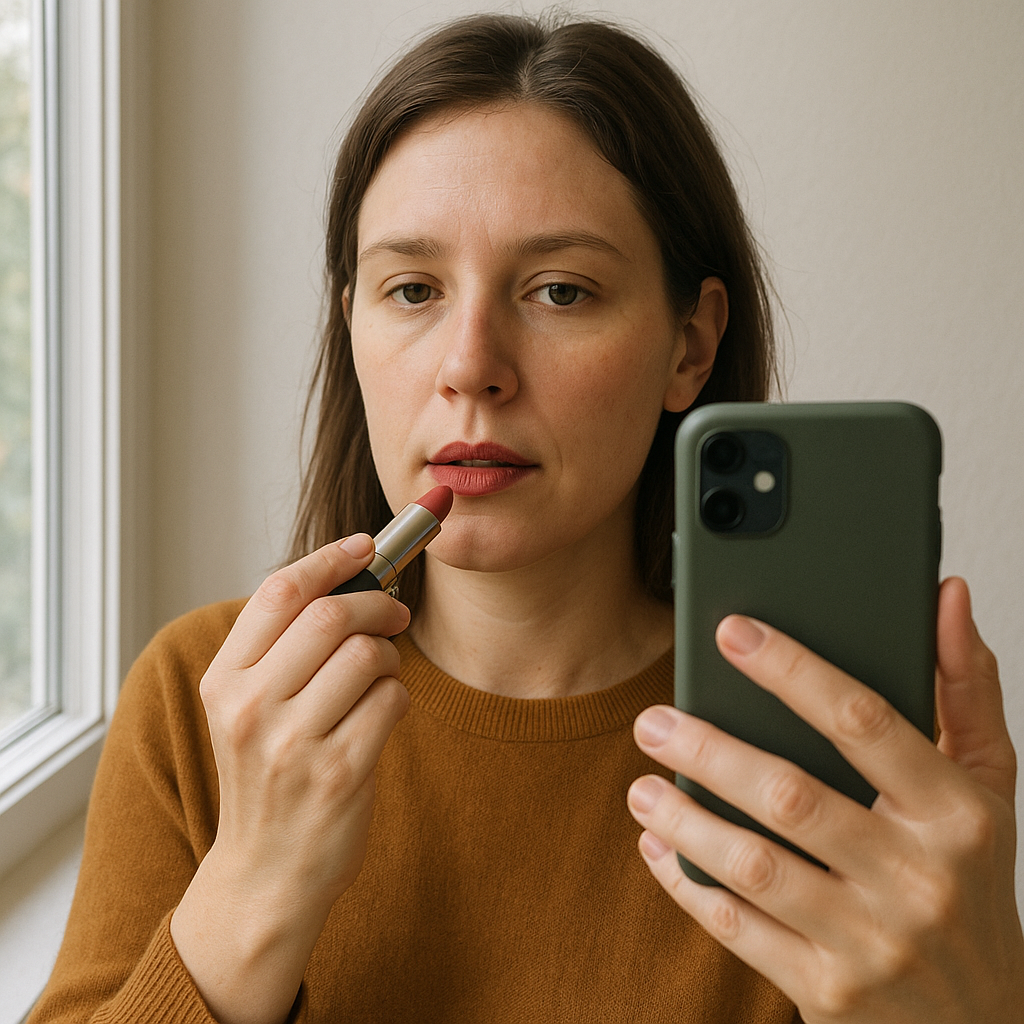
I started using lipstick as a color check when I realized my “mystery” outfits all failed the same way: the clothes were fine, my face looked unfinished. Not in a full-glam way. More like the outfit was speaking at a normal volume and I was whispering back. A lipstick (or tinted balm) is the fastest way I’ve found to test whether a shade you’re exploring is going to carry you, or whether it’s going to wear you.
You don’t need a whole collection. Pick one lipstick that you know looks like you on a good day. Mine is a mid-tone rose, the kind of shade MAC has made a million versions of over the years. Then do this: put on your outfit in the “new” color family, stand by a window, and take a no-smile phone photo before lipstick. Add one swipe. Same spot, same angle, another photo. You’re not judging your face, you’re judging the relationship between the tone on your body and the color on your mouth. If the lipstick suddenly looks too bright or too brown, that outfit hue is pulling it around. That can be fun, but it means the shade is strong and you might want to keep the rest of your palette quieter until you get used to it.
Where this gets useful is with tricky colors that live between categories: rust that wants to be orange, mauve that wants to be gray, chartreuse that wants to be a joke. With those, lipstick acts like a calibration tool. If a rose lipstick turns fuchsia next to your top, your top is likely cooler than you thought. If it turns brick, the top is warmer. That one clue helps you pick earrings and bag hardware without overthinking it. Silver next? Gold? Or just tortoiseshell and call it a day.
And if you don’t wear lipstick, use a tinted balm like Burt’s Bees or a sheer gloss. The point isn’t drama. It’s a quick check that your signature shade exploration is landing on your face, not just living on your torso like a rented costume.