
Three low-drama tweaks (cleanse timing, one active, and barrier nights) that keep a tiny routine from turning into a rashy mess.
Cleansing less works, but the timing is the trick

I used to brag that I could “get away with” rinsing my face at night. Then I hit that special combo of mineral sunscreen, a little concealer around my nose, and a long day where I touched my face more than I realized. My skin didn’t freak out immediately. It waited two days, then delivered tiny clogged bumps along my jaw like a receipt.
Here’s what fixed it without turning into a 10-step production: I stopped thinking in terms of “how many cleanses” and started thinking in terms of what was on my face. If I wore sunscreen or makeup, I do a real cleanse at night. Not a splash, not a makeup wipe, and not a half-hearted scrub that leaves mascara smudges on the towel. If it was a true bare-face day, I rinse or do a quick, gentle cleanse and move on.
On nights when I’m wearing something stubborn (water-resistant SPF, longwear base), I do the plainest version of a double cleanse: a cleansing balm or oil first, then a gentle cleanser. Nothing fancy. I like Clinique Take The Day Off Balm when I’m traveling because it doesn’t leak, and for cleanser I rotate between CeraVe Hydrating Facial Cleanser and La Roche-Posay Toleriane Hydrating Gentle Cleanser depending on what’s on sale. The tell that I’ve done it right is boring: my hairline and the sides of my nose feel clean, but not squeaky, and my towel doesn’t pick up foundation or sunscreen tint.
Morning is where I cut. Most days I just rinse with lukewarm water, pat dry, then go straight to moisturizer and SPF. If I used a heavy occlusive the night before (like Aquaphor on dry patches), I’ll use a small amount of cleanser in the morning so my sunscreen doesn’t slide around. Minimal routines work best when they respect the unglamorous part: take off what you put on, especially at night.
Pick one active and commit to the schedule, not the vibes
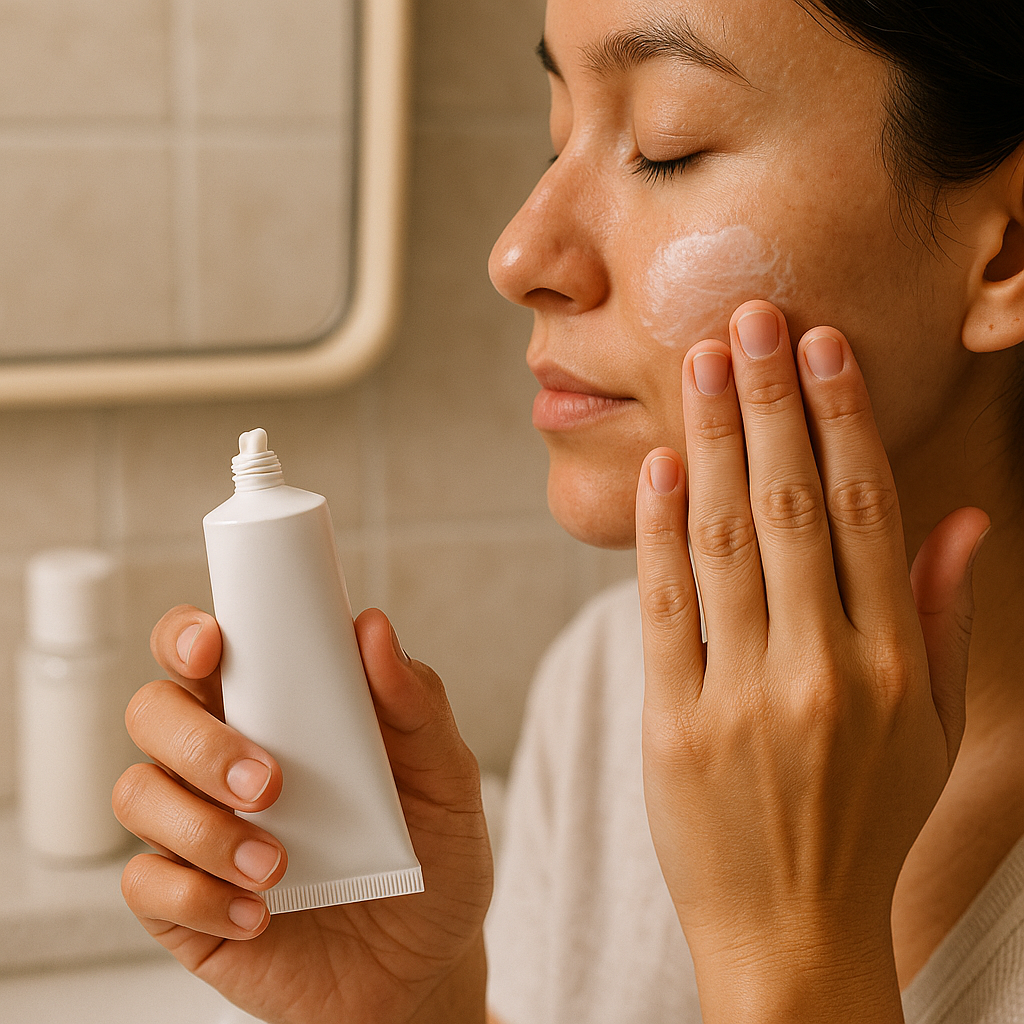
Minimalist routines get pitched like the products are the problem. In my experience, the problem is the randomness. The night you feel brave, you smear on a retinoid. Then you skip it for a week. Then you remember it again right before a big event and put it on like it’s a face mask. Your skin never gets a chance to adapt, so every “restart” feels like punishment.
If you’re keeping things tight, pick one active that matches what you care about most and build a boring cadence around it. For me, that’s retinoid on a schedule. For someone else it might be azelaic acid for redness, or salicylic acid if clogged pores are your main villain. The minimalist move isn’t “no actives.” It’s one lane at a time.
My current structure is simple enough that I can do it half asleep: two nights a week, retinoid; other nights, just moisturizer. I started at once a week for a couple weeks, then moved up. If I feel dry or stingy, I don’t “push through.” I drop back for a week and treat it like data, not a moral failure.
A few practical things that made it behave: I apply retinoid to fully dry skin (I brush my teeth first so I’m not tempted to rush). I use a pea-sized amount for my whole face, and I avoid the corners of my nose and mouth because those spots get angry first. If I’m feeling delicate, I do the sandwich method: moisturizer, retinoid, then another thin layer of moisturizer. This is where brands matter less than texture. Differin adapalene gel is easy to find and predictable. Prescription tretinoin can be amazing, but it demands more respect and a slower ramp.
One more non-negotiable: sunscreen in the morning. A minimal routine without daily SPF is like washing your car and parking it under a sap-dripping tree. I rotate EltaMD UV Clear and La Roche-Posay Anthelios depending on how my skin feels, and I reapply if I’m outside. Keep one active, keep it consistent, and the routine stays small without swinging between “nothing” and “why is my face peeling”.
Barrier nights are the secret ingredient nobody wants to count
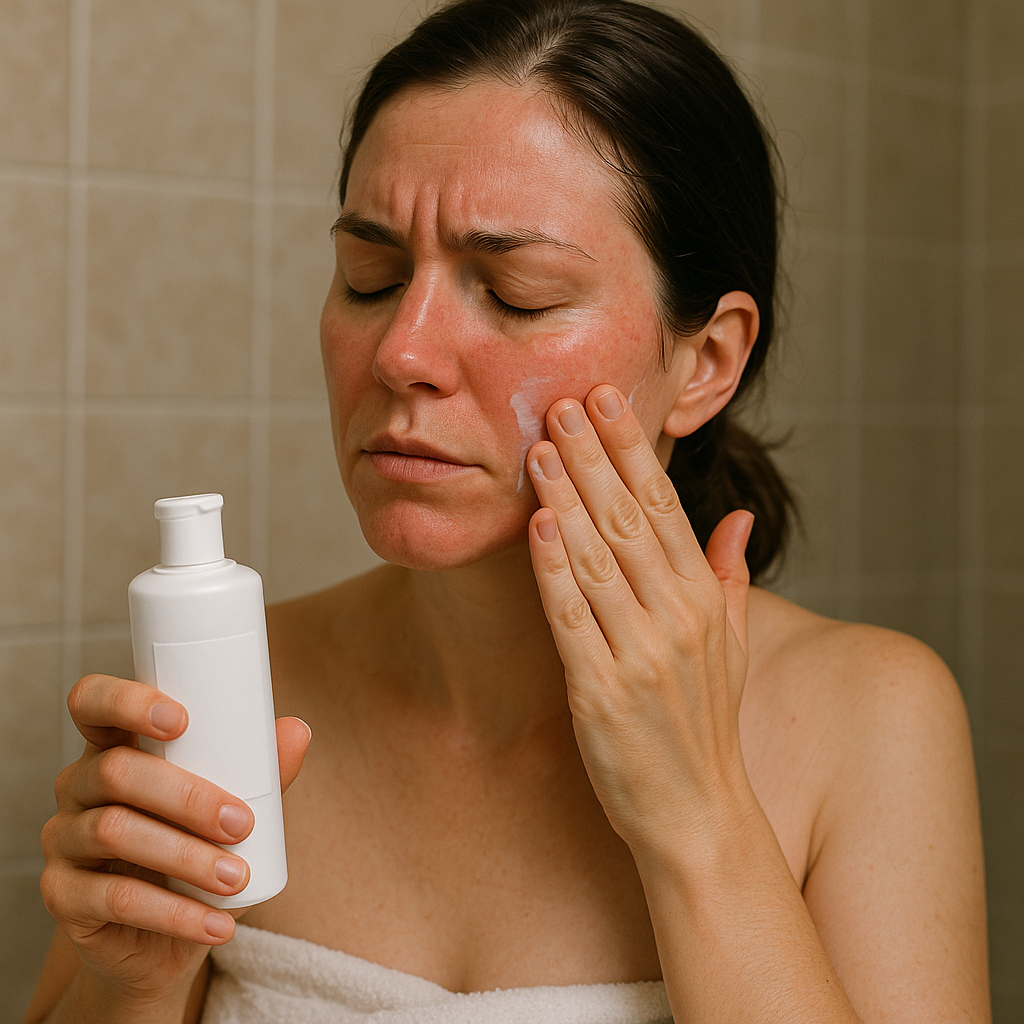
Minimal routines fall apart when you treat irritation like a surprise attack. It’s usually not. It’s the cumulative effect of little choices: a windy day, too-hot shower, a new cleanser that foams a bit too much, one extra night of an active because you wanted to “stay on track.” Then you wake up and your face feels tight in that shiny, slightly raw way that makes even water sting.
I started building in what I call barrier nights, and yes, it sounds like something a product founder would say. It’s not. It’s me being lazy in a way that keeps me out of trouble. A barrier night is: cleanse (gently), moisturize (generously), and stop. No acids, no retinoid, no “maybe just a tiny bit.” If my complexion is feeling sensitive, I use a moisturizer with ceramides (CeraVe Moisturizing Cream is boring and reliable) and I press it in, especially around my mouth and the sides of my nose where I tend to flake.
When I need extra help, I reach for La Roche-Posay Cicaplast Balm B5 on top of moisturizer. It’s thick and a little chalky, and it leaves that “I did skincare” sheen. I only use it at night. If I’m dealing with an actual dry patch (like a corner of my mouth that cracked), I’ll dab a rice-grain amount of Aquaphor over that spot, not my whole face. Slugging everything sounds efficient until you wake up with clogged pores around your chin.
The other underrated part is hair behavior. If I’m using a leave-in conditioner or hair oil (hello, Olaplex No. 6 or Moroccanoil), I keep it off my face and neck. I learned this the hard way when I was blaming my moisturizer for bumps along my hairline, and it was really product transfer from my pillowcase. On barrier nights, I clip my hair back, sleep on a clean case, and keep my hands off my face.
These nights don’t feel productive. That’s why they work. They keep a minimalist routine from turning into an endless cycle of “fixing” what you just irritated.