
Three hands-on ways I mix old-school pieces with modern chains so it reads intentional, not costume-y.
The brooch goes on your knit, not your lapel
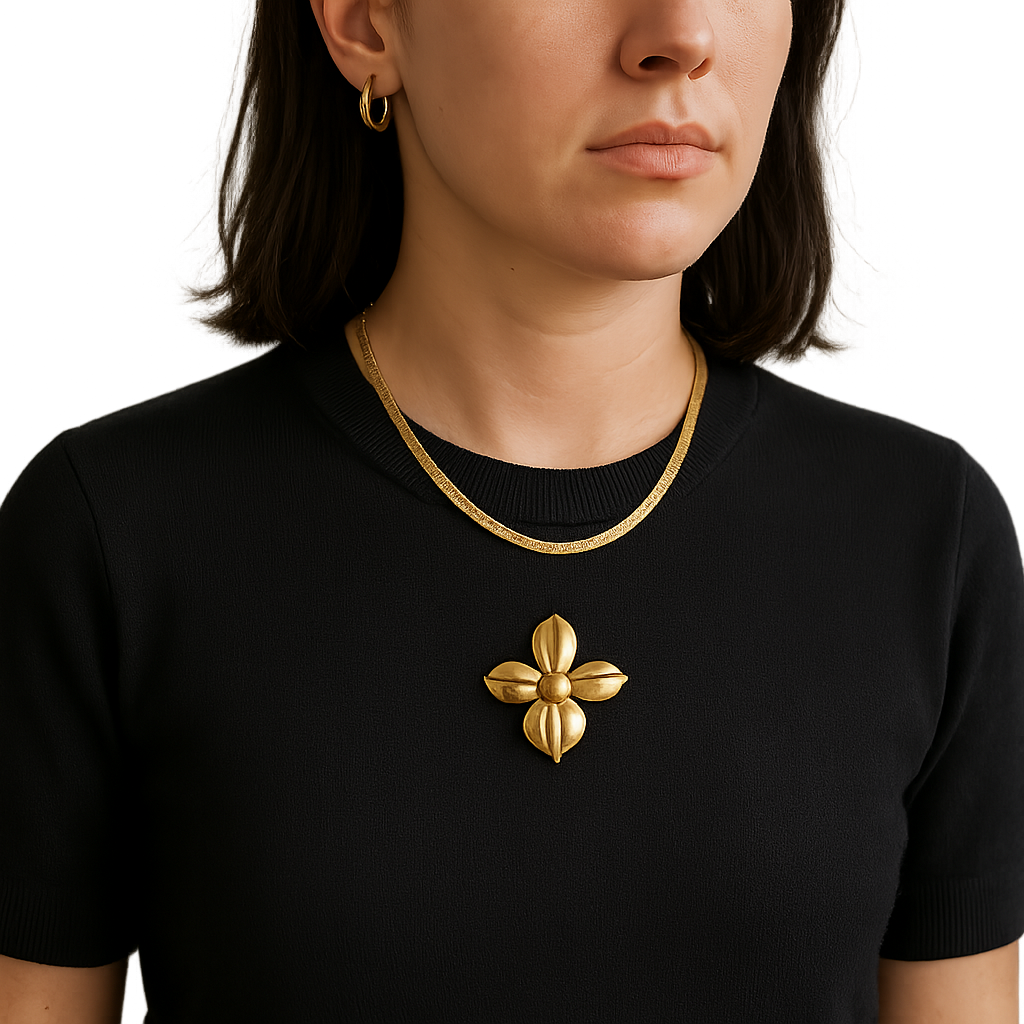
I started doing this out of pure laziness. I had a thrifted gold-tone brooch with that slightly-too-serious mid-century vibe, and I kept skipping it because I didn't feel like doing the whole blazer thing. Then one morning I pinned it dead-center on a black crewneck merino sweater and it immediately looked like I meant to be wearing jewelry, even though I was in jeans and sneakers. That placement is the trick. Lapel reads "office" or "occasion." Center-chest on a knit reads more like styling.
Here are the details that make it work in real life: use a tighter knit (merino, ribbed cotton, even a sweatshirt) so the pin doesn't drag and create a sad little scoop by noon. If your brooch has a long pin, I run it through the fabric once, then back through again about a quarter inch away, like a small stitch, so it has two bite points. It holds better and it doesn't spin as you move. If it's a heavy piece, I put a tiny square of felt on the inside as a backing so the clasp isn't chewing up the yarn.
Now make it feel like it belongs with modern jewelry: keep everything else sleek and a little blunt. I like one herringbone or snake-style chain (not stacked), small hoops, and that's it. When I overdo it with multiple pendants, the brooch starts to look like a costume character accessory. One clean chain and the brooch becomes the punctuation mark.
Use a vintage pendant as a "stopper" on a long chain
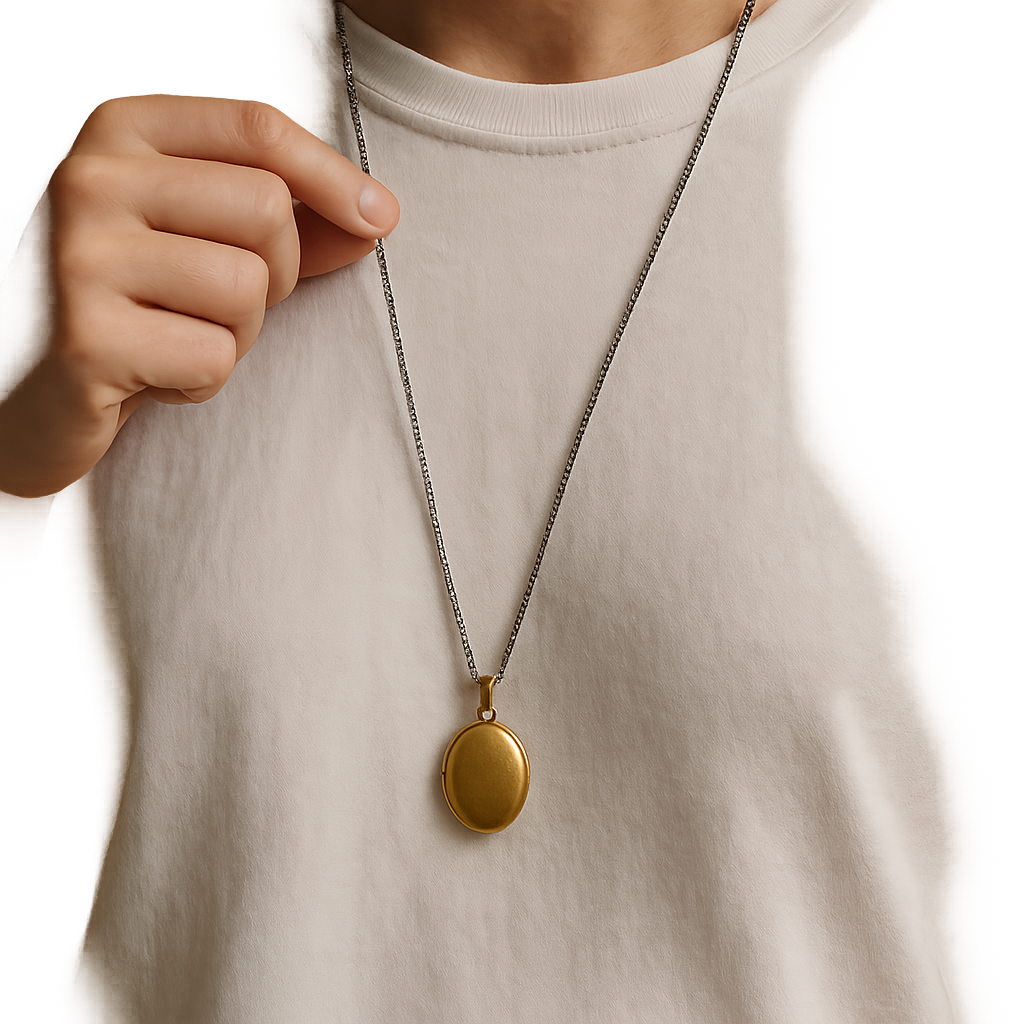
If you like the look of a long chain but hate the way it flops around, this is the cleanest fix I've found that doesn't involve buying some specialty "layering" set. I take one vintage pendant, usually something with a little weight like a small locket or an old medal-style charm, and I use it like a visual stopper. It gives the chain a purpose. Without it, a long chain over a tee can feel like you forgot to put on the rest of your outfit.
Mechanically, this is easy: pick a modern chain that feels current on its own. A simple box chain or a thin curb chain is perfect. Then choose a vintage pendant whose bail opening is large enough to slide on that chain. If the opening is too small, I don't force it, and I don't start bending bails with pliers unless I'm willing to risk cracking an older solder joint. I just switch chains. The point is a mix that looks intentional, not a repair project.
Styling-wise, I keep the pendant slightly lower than my sternum. Higher reads "charm necklace" in a way that can get cutesy fast, especially with patina or engraving. Lower reads more graphic, like a single bold shape on a line. And I do not match the metal perfectly. If the pendant is warm gold and the chain is cooler or a little silvery, great. The mismatch is what signals this isn't a set from the same display card.
One more thing I've learned the annoying way: a vintage pendant with a hollow back can flip and show its underside all day. Before I commit, I wear it for an hour at home and see if it behaves. If it doesn't, I swap to a flatter piece, or I add a second tiny charm right above it to act like a little counterweight.
Two textures, one ear: vintage clip-ons converted to posts
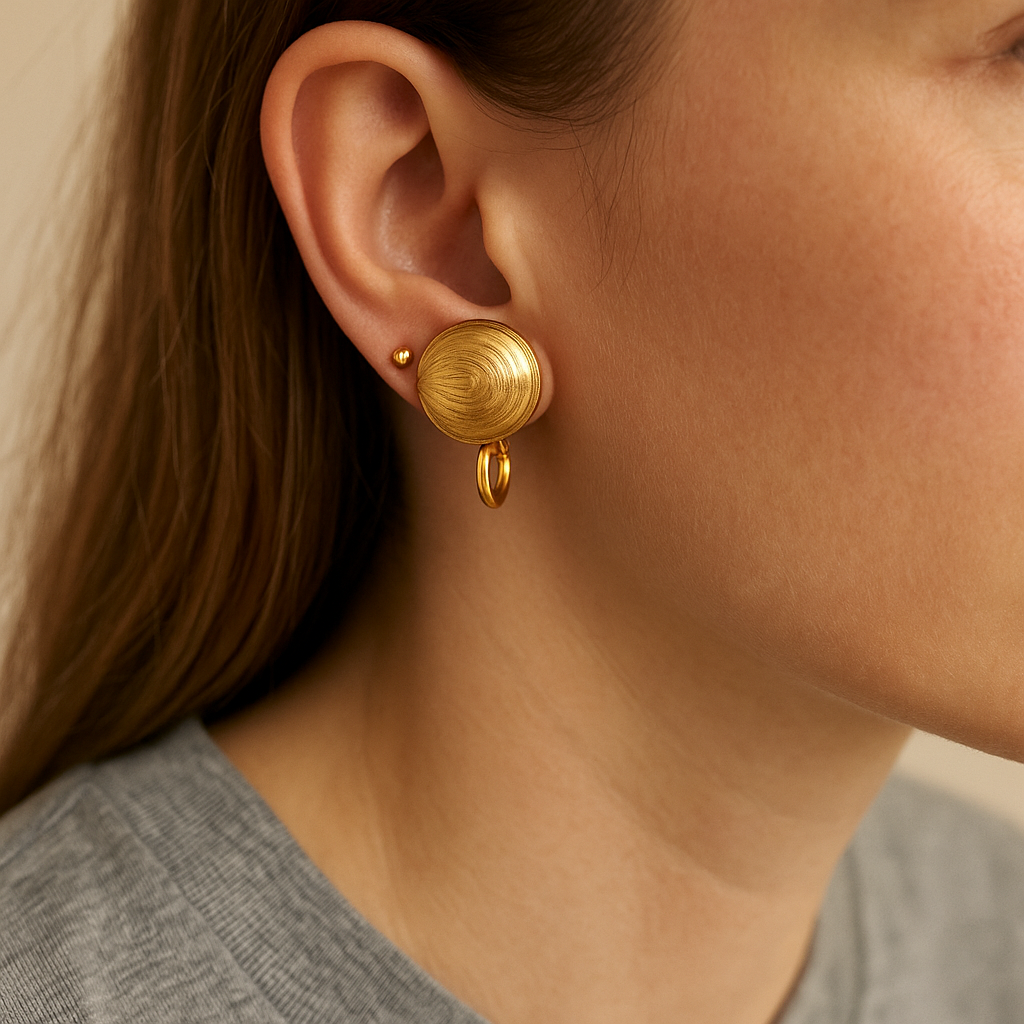
I love the look of vintage earrings, and I hate wearing vintage clip-ons. Ten minutes in, I'm adjusting them. Twenty minutes in, I'm annoyed. So I started buying clip-ons only when the front is special, then having a jeweler convert them to posts. This is the move that makes mixing old and new feel effortless because you can pair a piece with history next to a modern hoop and it still feels like your everyday ear stack.
Here's what I bring to the jeweler: the clip-ons, plus the exact modern earrings I wear most (for me it's a small gold hoop and a tiny bezel stud). I ask them to place the new post so the vintage front sits upright on my lobe, not tilted forward like it's trying to escape. That placement varies by design, and it's the part you can't eyeball well at home. Many shops can do the conversion with a simple soldered post and a clean comfort back. Cost depends on complexity, but I treat it like I would a shoe repair. If I wouldn't pay to resole boots, I don't do this either.
Once they're converted, the styling is simple and looks sharp: I wear the vintage piece as the "main" on the first hole, then a modern hoop or tiny huggie in the second. The contrast I look for is texture, not theme. A ribbed, diamond-cut, or smooth hoop looks great next to a vintage brushed finish, a little patina, or a detailed filigree front. If both are ornate, it gets heavy fast. If both are plain, it reads like you lost the fun part.
One practical note: older costume pieces sometimes have plating that's worn thin at the edges. I don't spray perfume or hairspray after putting them on, and I store them in a small pouch so the fronts don't rub together in a dish. That tiny bit of care is the difference between "cool vintage" and "why is my ear green."