
Three fast, hands-on checks I use before I buy: fiber feel, lining honesty, and hardware that won't turn into green gunk.
The palm test: can you feel the fiber, not the finish?
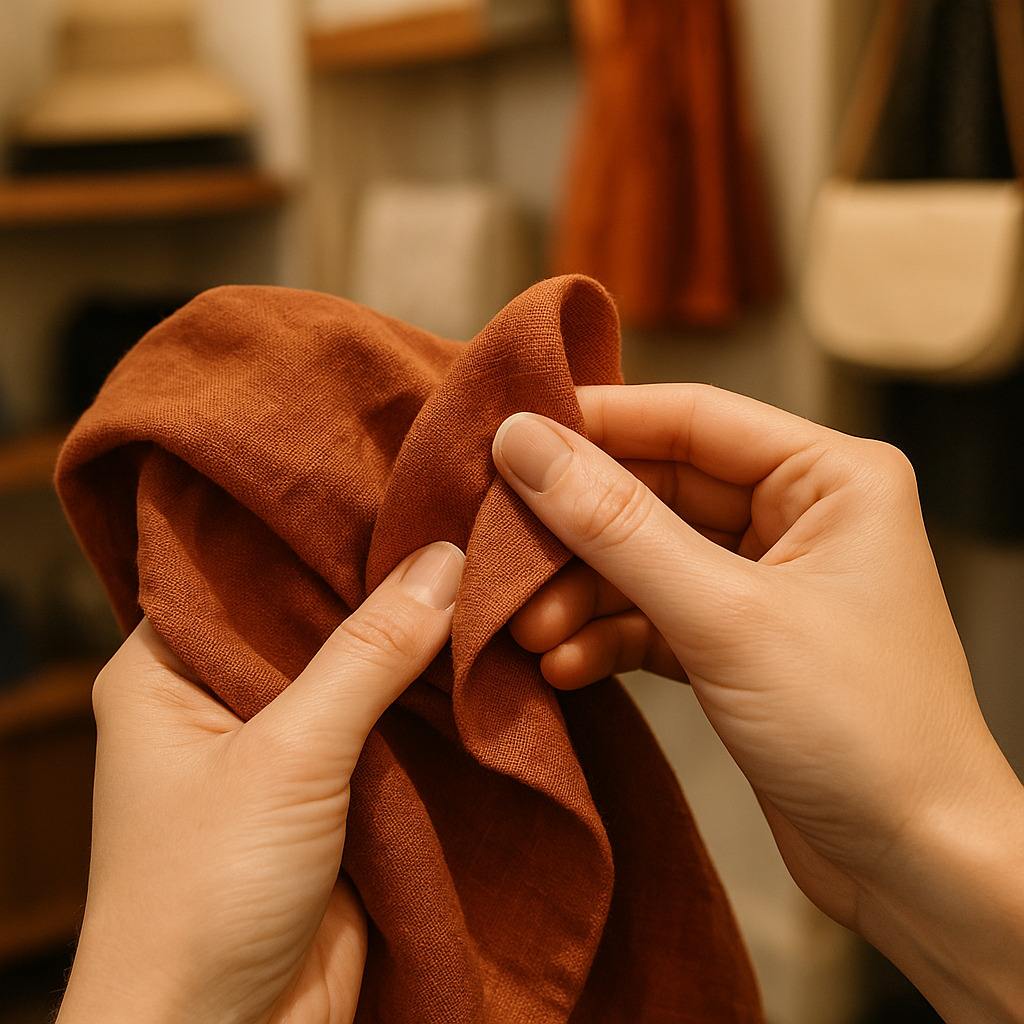
Pick up the piece and ignore the marketing for ten seconds. If it's a bold scarf, a wide headband, a dramatic scrunchie, a padded clutch, a bucket hat, even an oversized bow barrette, I do the same little sequence every time: rub, crumple, release, then fold the fabric over my fingertip. You're looking for the fiber's behavior, not the surface coating.
Here are the tells I trust in a store aisle. Viscose/rayon (often billed as "plant-based") can feel cool and slick, but it also wrinkles in sharp, thin lines when you crumple it. If it springs back like a rain jacket, you're probably touching a synthetic finish or a tight poly blend. Linen has a dry grab to it and a kind of airy stiffness that creases wide, not micro-wrinkled. Hemp can feel similar to linen but usually rougher and a touch "hairy" at the yarn. Organic cotton in a statement piece (like a structured headband) tends to feel warmer and slightly grippier than polyester, and it doesn't squeak when you rub it fast between your palms.
The fold-over-the-fingertip part is my favorite. Fold the fabric into a tight, clean edge and press that edge between thumb and finger. If the edge feels plasticky and slides like it's been clear-coated, it often has a finish that will start to look tired once you get heat, hair product, or sunscreen on it. If the edge feels more like threads than film, it usually ages better. Bonus check: if it's supposed to be a natural fiber but it has that uniform, shiny "satiny" glare under store lighting, I look for the fiber content label on the seam. "Viscose" or "cupro" can be lovely, but I want it to be honest about what it is, because care and longevity are different than linen or silk.
I don't pretend this proves anything about dyes or supply chain, but for sustainable materials in bold pieces, it keeps me from buying the stuff that feels like plastic wearing a costume.
Lining honesty: the bag or hat that breathes (and doesn't peel)
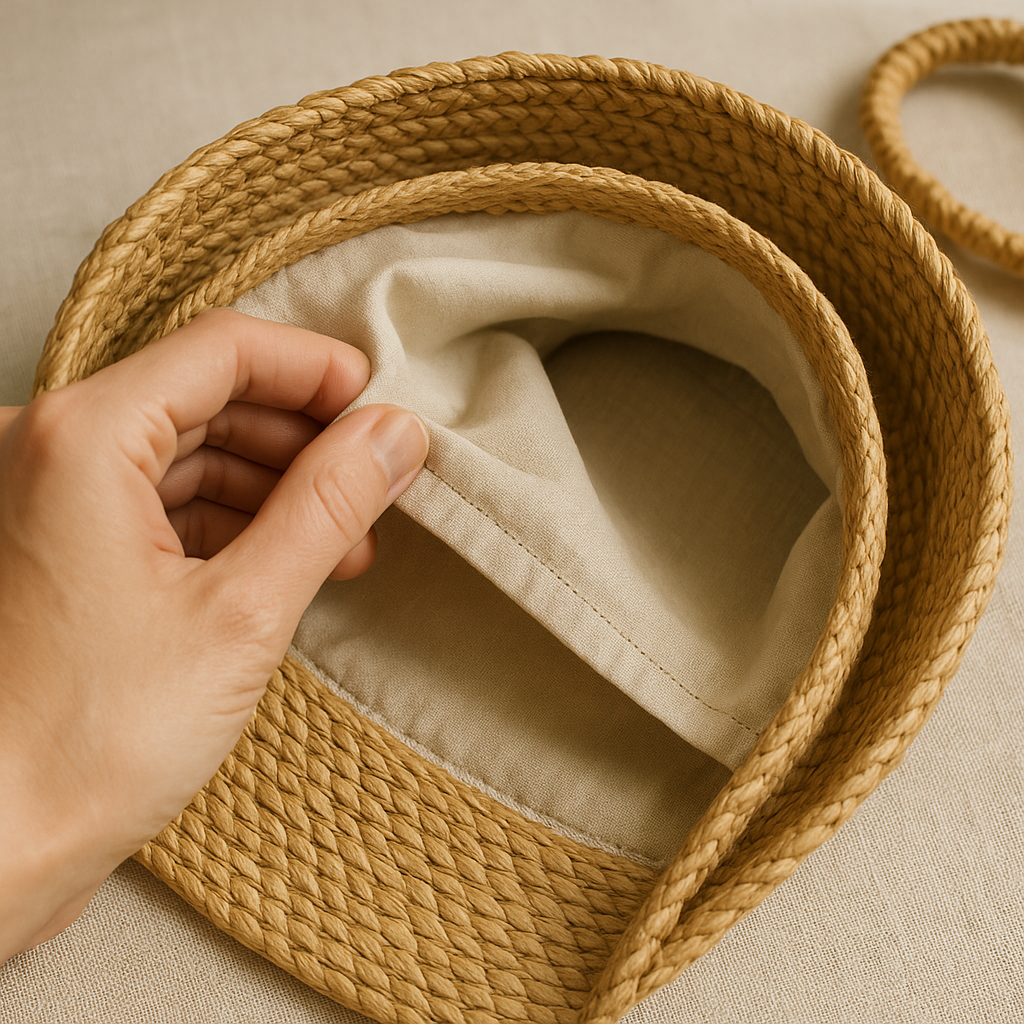
I've learned (the annoying way) that the loud part of a statement piece is rarely what fails first. It's the lining. The lining is where brands quietly tuck in the cheaper stuff, and it matters most on pieces that touch sweat, hair products, and hand lotion: hats, headbands, clutches, and anything you carry under your arm.
Start by turning the item inside out as far as the store will let you. If it's a clutch, open it and pull the lining forward. If it's a bucket hat, stick your hand inside and pinch the sweatband area. I'm not hunting for perfection. I'm checking for honesty and comfort. A cotton or linen lining has a little drag against your fingertip and it doesn't feel cold. Cupro can feel smooth but not clammy. Polyester lining often feels slick in a way that makes the whole item slide around, especially hats that already want to migrate backward on your head.
Then I look at the seam treatment. If the lining edge is heat-sealed (it looks like a crisp, melted line), that's a clue it's synthetic and may eventually pucker or peel. A turned hem or bias-bound edge takes more work and usually holds up better. On bags, I also check if the lining is separate and removable (rare, but a green flag) or glued down in places. Glue isn't automatically evil, but when a bag is pitched as an "eco" hero and you can see shiny glue smears at the corner seams, I'm out. That stuff tends to yellow and it collects grit.
If the seller is claiming recycled content, I want specifics on the hangtag: "recycled polyester" is fine, but I don't want a vague "recycled materials" line with no fiber content anywhere. In my closet, the pieces that get worn constantly are the ones that don't feel like a trash bag on the inside. You notice it more than you think, especially in summer. And once a lining starts flaking or pulling, the whole bold look goes from intentional to beat-up fast.
Hardware that won't turn your green dress green
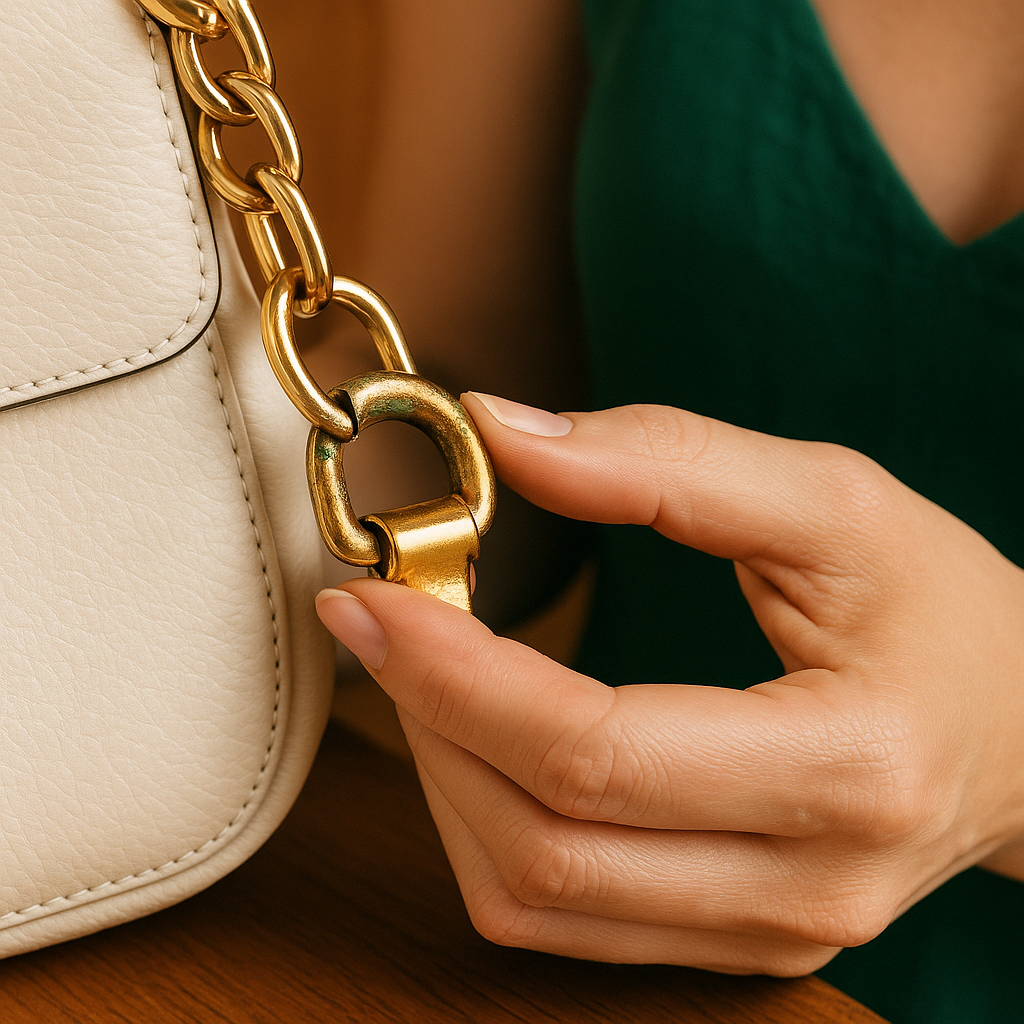
I love a big, weird accessory. Oversized earrings, a buckle the size of a coaster, a chain strap that makes a plain tank look finished. But if the hardware is junk, it doesn't just "age." It stains. That's the part people don't warn you about, and it's also the part that's easiest to spot-check before you buy.
My routine is simple and a little unglamorous: I find one point where metal touches fabric or skin and look for a clean, even finish. On earrings, I check the post and the backing, not the decorative front. On a statement belt, I flip the buckle and inspect the prong and the back plate. On a bag, I look at the D-rings where the strap clips in. If any of those spots show mottled color, rough plating, or a coppery underlayer peeking through at the edges, that piece is already on a timer.
I also do a nail test. Not scratching like a gremlin, just a light drag of my fingernail across an inconspicuous spot on the underside of a clasp or ring. If the finish feels soft or gummy, it tends to wear off fast. If it feels like a hard shell, it usually holds longer. This isn't a guarantee of nickel content or allergy safety, so I don't pretend it is. If you're sensitive, you still need clear materials info or to buy from brands that specify stainless steel, sterling silver, or solid brass with a proper coating. But for everyone else, this catches the worst offenders.
One more thing: smell. Not a dramatic sniff, just a quick check when the item is right in your hands. Cheap plating plus moisture can give off a sharp metallic odor that sticks to your fingers. When I notice that in-store, it always shows up later as tarnish on the parts that rub, like the clasp on a statement necklace or the snap on a headband.
If you're trying to buy fewer, better bold pieces in better materials, hardware is the quiet deciding factor. The fabric can be beautiful, and then the clasp turns your collarbone green in July. No thanks.