
Three texture moves (cable knit, leather, and suede) that keep a one-color outfit from reading flat under harsh lighting.
Cable knit as your built-in spotlight
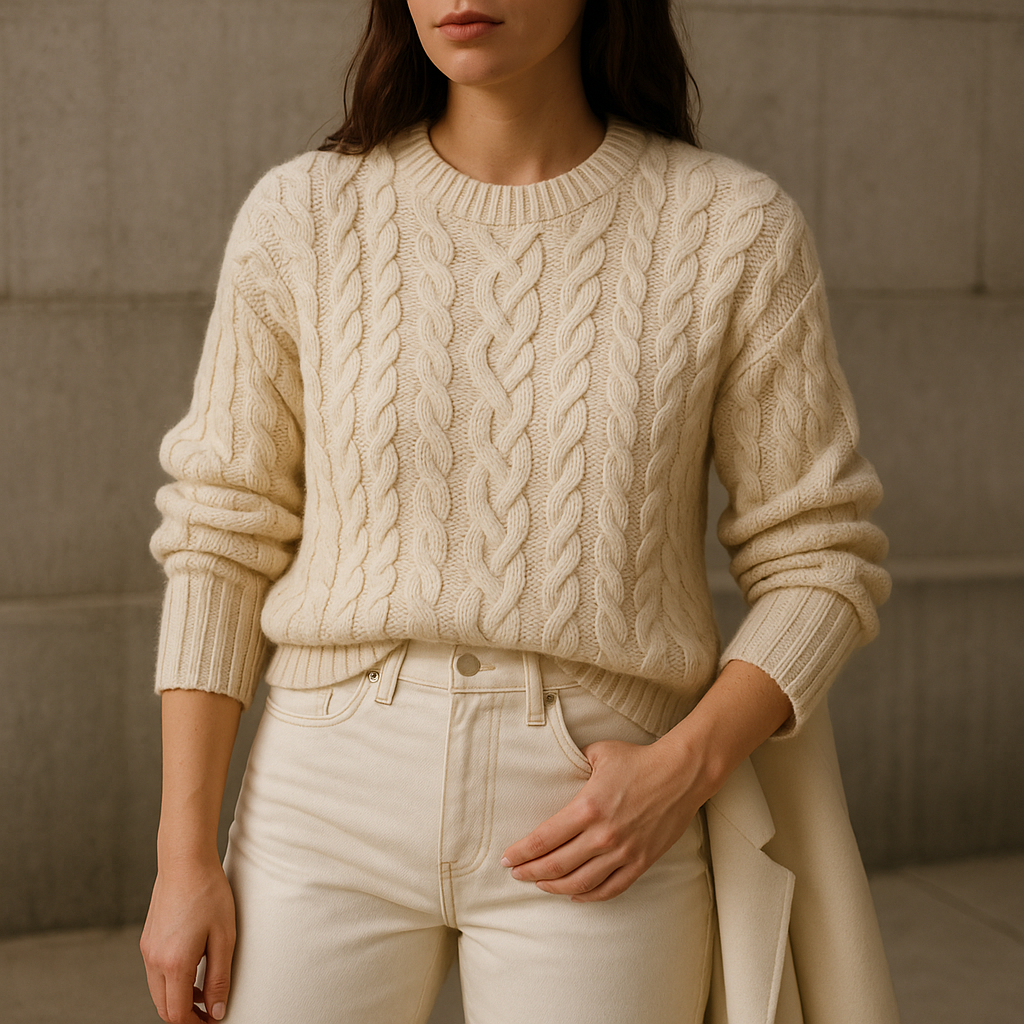
When I want a monochrome outfit to read intentional from across a parking lot, I start with cable knit. Not because it’s “cute,” but because it does the light-work for you. A flat black merino crew and black jeans can look like you dressed in the dark (even if you didn’t). Swap the top layer to a chunky cable crew or a cardigan, and suddenly the same color has highs and lows. You can see the ridges and shadows even under unforgiving overheads, which is exactly when a single shade usually goes dead.
The move I’ve repeated for years is: one thick cable on top, one smooth layer underneath, and one matte bottom. For example, an ivory cable sweater over a thin ivory ribbed tank, with cream straight-leg denim. Keep your whites in the same neighborhood (don’t do optic white with oatmeal unless you want contrast). The little detail that matters is the neck and cuff finish. Cable knit at the wrist can be bulky, so I either push the sleeves once to the forearm (so it looks like a choice) or I pick a sweater with a tighter cuff that sits cleanly under a coat.
Shoe texture is where I stop the outfit from looking like a winter pajama set. In a beige-on-beige look, I’ll pick suede boots instead of smooth leather, or even a nubby loafer. You’re not changing the color story, you’re changing how it catches light. If you’re shopping, you don’t need to chase a specific brand, but you do want a cable that’s raised enough to show from six feet away. The limp, low-relief kind disappears the moment you put a coat on, and then you’re back to “why” does my outfit look flat?
Leather in the same shade beats “matching” every time
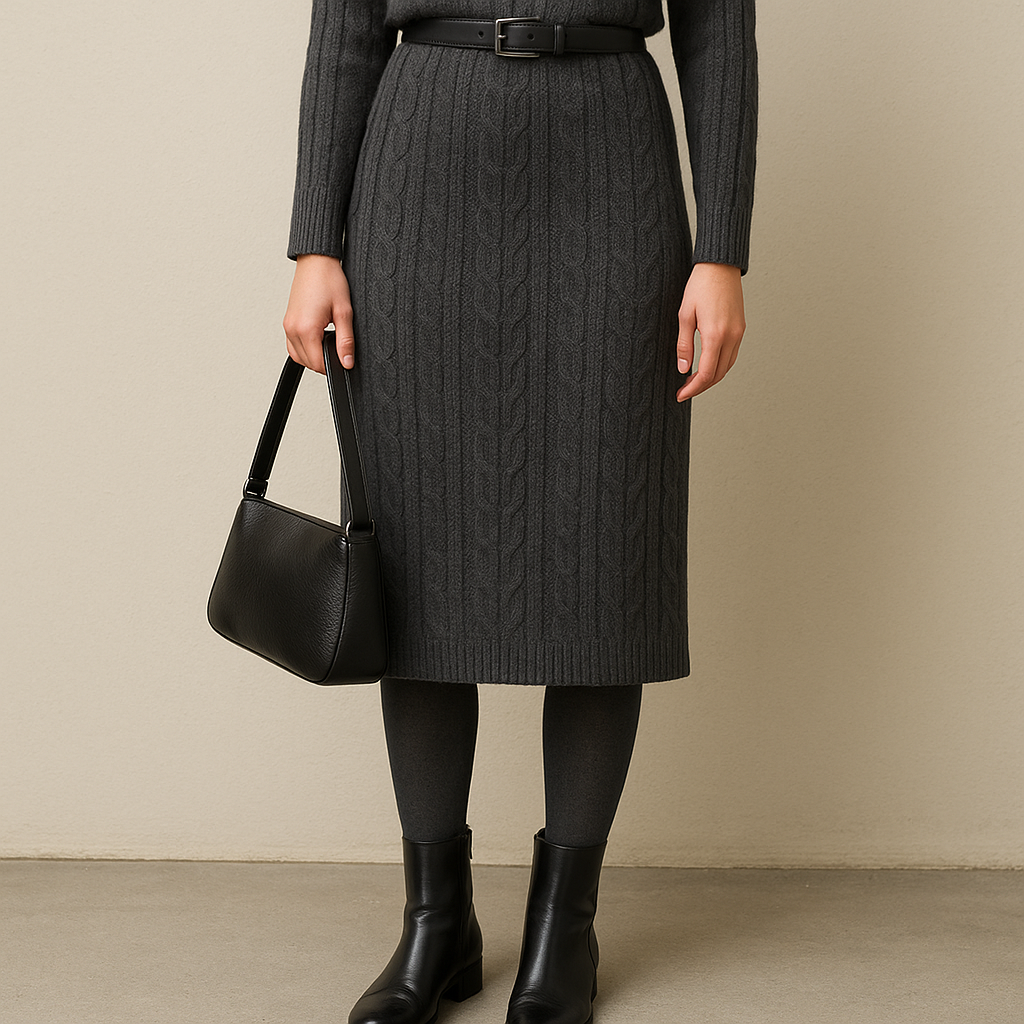
I used to get hung up on “perfect” matches in a one-color outfit, and it’s a waste of energy. The thing that makes monochrome look elevated isn’t that your black boot is the exact same black as your black pants. It’s that one of them has a different surface. Leather is my favorite because it’s instantly legible: it reads as its own material even when it’s dyed the same shade. A black leather belt, black leather boot, or a black leather bag gives your eye a break from knit/denim/jersey without breaking the shade line.
Here’s the combo I reach for when I want to look pulled together but I’m not trying to “dress up”: charcoal knit dress, charcoal tights, and black leather ankle boots. The boots don’t need to match the dress. In fact, I prefer when they don’t. The little shift (charcoal to black) adds depth, and the shine of leather keeps the tights from turning into a single dark tube from hip to toe. If you want to keep it strict, go charcoal leather instead, but don’t pick something polished to a mirror unless the rest of the outfit can handle that level of sharpness. Most of the time, a slightly worn-in leather looks better with knit because it has its own texture story.
One practical styling note you only learn after a few annoying mornings: if your outfit is all the same shade, your hardware becomes loud. I’ve had a big silver buckle hijack an all-cream look in a way I didn’t expect. So I keep buckles simple in monochrome: low-profile, not too shiny, and ideally echoing whatever metal is on your bag zipper. If I’m wearing a black bag with gold hardware, I’ll either choose a belt with a subtle gold buckle or skip a belt and let the leather show up in the shoes instead. That way the material is the contrast, not the sparkle.
Also: leather layers count. A leather jacket over a same-color tee and jeans is an easy win because it gives you structure, plus that slightly reflective finish. And if you’re doing a monochrome brown outfit, leather is where it gets good: espresso leather boots with cocoa trousers and a chocolate sweater reads rich on purpose, even if every piece is from a different store.
Suede and brushed fabrics for a softer monochrome
There’s a version of monochrome that’s sharp and high-contrast (think crisp poplin and sleek boots), and there’s the one I wear when I want to look good but I also want to feel like I could sit cross-legged on the couch without adjusting anything. That’s where suede and brushed fabrics earn their keep. Suede doesn’t throw light the way smooth leather does. It absorbs it, which makes a single-tone outfit feel deeper and, honestly, a little more forgiving in daylight photos.
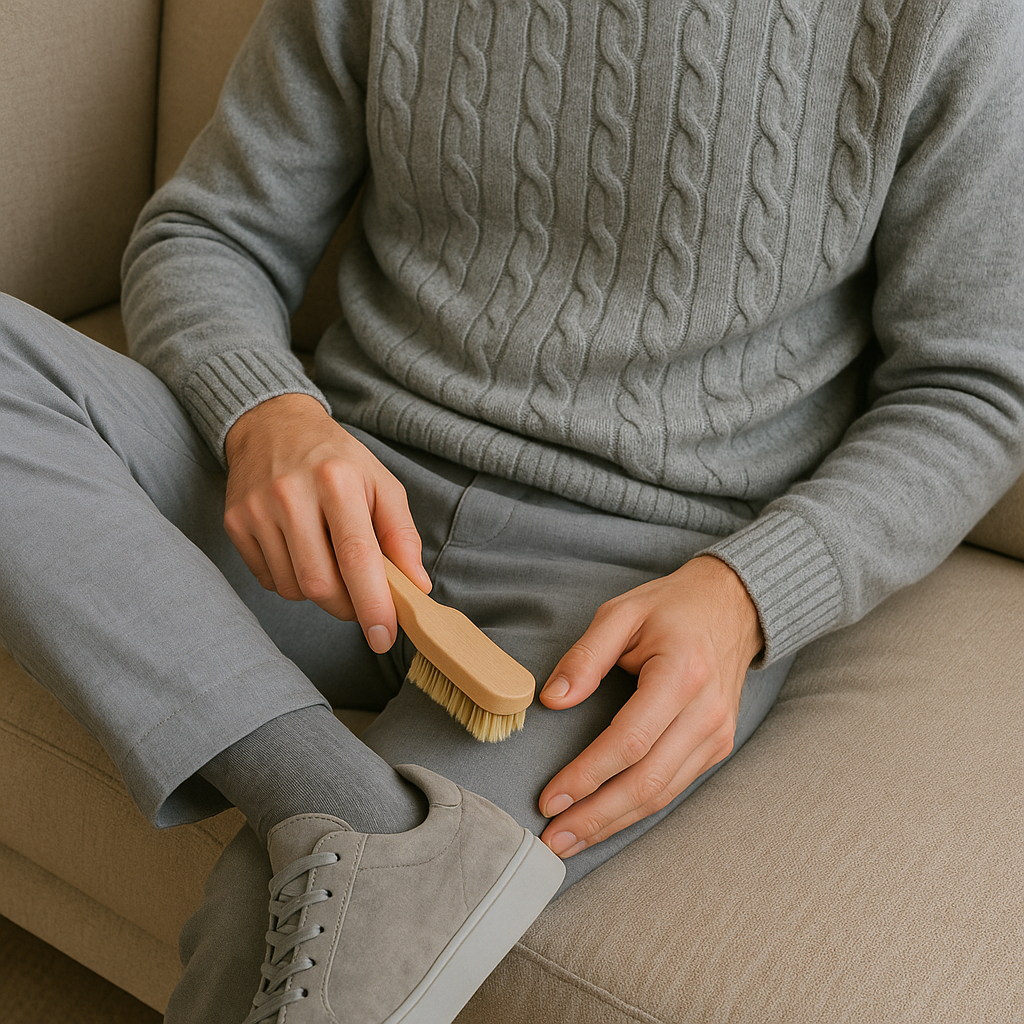
If you’ve never tried this, start with shoes because it’s the least fussy place to add a new surface. Take a head-to-toe gray look: heather gray sweatshirt, gray tailored joggers (or trousers if you’re going to an office), and then swap your usual white sneaker for a gray suede sneaker or a suede loafer. It’s the same color family, but now you have three distinct textures: fleece or French terry up top, a smoother weave on the bottom, and that velvety nap at the foot. It reads like you planned it, even if you got dressed in under five minutes.
Brushed fabrics do a similar job in clothing. A camel outfit built from a fine-gauge knit and a twill pant can look a little flat. Add one brushed piece and it wakes up: a wool flannel blazer, a soft brushed scarf, or even a fuzzy mohair hat. I’m careful with piling on too many fuzzy textures at once, because then the whole look turns into one big blur. One is plenty. Two is my max, and if I do two, I keep one of them small (like the scarf) so I’m not drowning in nap.
Maintenance matters with suede, and I’m not going to pretend otherwise. I keep a small suede brush and an eraser block in my entry drawer, because scuffs on a monochrome shoe show up fast. I don’t do the “hope for the best” thing with rain, either. If the forecast is wet, I pick textured rubber soles or I switch to treated leather. But on a dry day, suede is the easiest way to make one hue look dimensional without adding a print, a second shade, or a bunch of jewelry that fights the vibe.